
Finding a book that keeps a child interested is always a win, but I especially love discovering stories that offer a little something more. Some books help children slow down at bedtime, some give them words for big feelings, and others make them curious enough to keep asking questions long after the last page.
As both a mom and a teacher assistant, I see how differently children connect with books. One child may want a comforting story they can read again and again, while another would rather flip through pages filled with surprising facts. That is why I put together this collection of children’s books that inspire learning in different ways. These picks encourage children to explore animals, manage separation, invent their own stories, and discover how much fun nonfiction can be.
Disclosure: [Add your disclosure here if these books were gifted or provided for review. This post may also contain affiliate links, which means I may earn a small commission at no additional cost to you.]
Why Children’s Books That Inspire Learning Matter
Learning does not always have to look like a lesson. It can happen while a toddler listens to a gentle bedtime story, while a child talks about missing a parent, or while an older reader follows a trail of wonderfully strange facts.
The best children’s books that inspire learning give families something to enjoy together while opening the door to a new conversation, question, or activity. They do not need to feel educational on every page. Sometimes the learning happens naturally because the story makes a child feel understood or curious about what comes next.
The books in this collection are meant for different ages and interests, so I would not necessarily compare one directly with another. Instead, I think of them as books for four different reading moments.
| Book | Suggested reader | What it encourages |
|---|---|---|
| Sleepy Savanna and La Sabana Soñolienta | Babies, toddlers, and young animal lovers | Bedtime routines, animal knowledge, and bilingual reading |
| What Will I Do If I Miss You? | Children beginning daycare or school | Emotional confidence and coping with separation |
| The Book Machine | Ages 5–7 | Creativity, storytelling, and problem-solving |
| FACTopia! | Ages 8–12 | Curiosity, independent reading, and nonfiction discovery |
A Calming Animal Story for Bedtime
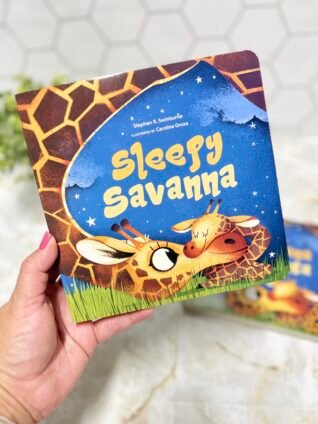
Sleepy Savanna and La Sabana Soñolienta
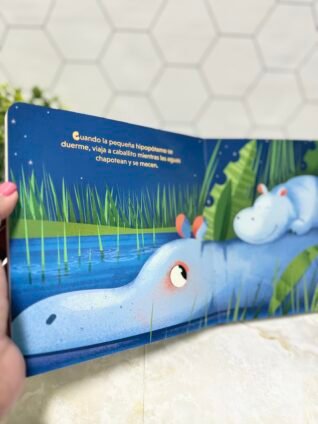
Bedtime books need to hold a young child’s attention without making bedtime feel even busier. Sleepy Savanna: A Bedtime Book of Baby Animals, written by Stephen R. Swinburne and illustrated by Carolina Grosa, finds a sweet balance between a calming read-aloud and an early introduction to wildlife.
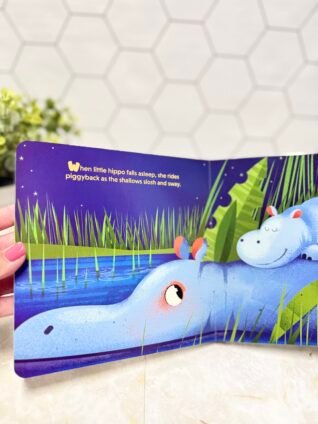
The story visits ten little animals settling down for the night on the African savanna. Children meet baby animals including a giraffe, cheetah, crocodile, elephant, lion, hippo, rhino, ostrich, and flamingo. The lyrical language creates the sleepy feeling families want at bedtime, while small animal details give curious children something new to notice. The 20-page board book was also chosen as a 2026 Children’s Book Council Hot Off the Press selection. You can find additional details on the publisher’s Sleepy Savanna page.
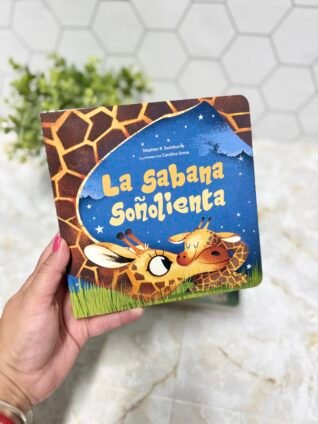
I also received the Spanish edition, La Sabana Soñolienta, and I love that families can enjoy the same story in either language. As a bilingual family, I appreciate having books that allow Spanish to become a natural part of an everyday routine. A bedtime story feels familiar and comforting, so it can be a lovely opportunity to introduce or reinforce words in another language without making it feel like homework.
Even if a child currently understands only one language, a familiar story can provide a gentle introduction to the other one. Families can begin with the language the child knows best and gradually add repeated words, animal names, or short phrases from the second edition. There is no pressure to translate every page. The goal is simply to make both languages feel like a natural part of reading together.
This pair is a good example of children’s books that inspire learning during an ordinary family moment. After reading, you could ask your child which baby animal they would like to see at the zoo, practice the animal names in English and Spanish, or let them pretend to curl up like their favorite animal.
Best for: Bedtime, young animal lovers, bilingual families, and baby-shower gifts.
A Reassuring Story for Children Who Miss Someone
What Will I Do If I Miss You?
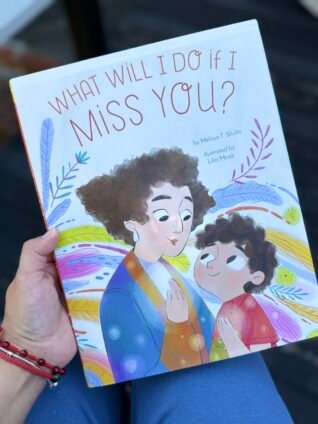
Starting daycare or school can bring plenty of excitement, but it can also bring worry. In What Will I Do If I Miss You?, written by Melissa T. Shultz and illustrated by Lilia Miceli, Alex worries about being away from his mom when he starts day school.
Instead of dismissing his feelings, his mother listens and helps him create a heart-to-heart connection that he can remember when they are apart. I like that the story gives children more than reassurance. It introduces a simple self-soothing idea that a family can talk about and practice together.
As someone who now works in a school, I know that goodbyes can be one of the hardest parts of the day for some children. A story like this can help a child understand that missing someone is normal while reminding them that they are still safe, loved, and connected.
Picture books can be especially helpful when children do not yet know how to explain everything they are feeling. Seeing a character experience a familiar worry gives them a comfortable way to begin talking. While reading, an adult can pause and ask what Alex might be feeling, whether the child has ever felt that way, and what helps them feel better.
The book is based on the author’s true story and has received notable recognition. It was selected as one of Child Mind Institute’s Best Kids’ Books on Mental Health of 2025 and as a 2026 Notable Social Studies Trade Book. Families can also access free reading guides and activities in both English and Spanish through Familius.
Among these children’s books that inspire learning, this is the one I would choose when a child needs emotional support more than facts or academic practice. It could be especially helpful before the first day of school, after a school break, or when a parent returns to work.
Try this after reading: Ask your child what helps them feel close to someone they miss. Together, choose a small routine they can use, such as placing a hand over their heart, carrying a family photo, or repeating a reassuring phrase.
Best for: Daycare and preschool transitions, back-to-school reading, working families, and conversations about separation.
A Creative Book for Future Writers and Inventors
The Book Machine
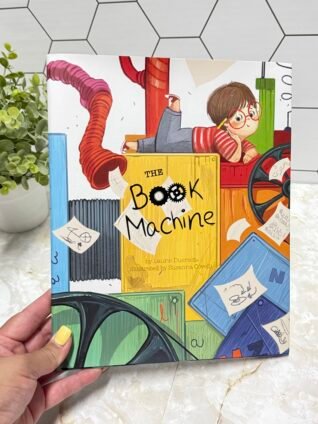
What happens when a child loves books so much that he tries to build a machine to make an entire library? That is the playful idea behind The Book Machine: A Story About the Magic of Books, written by Laurie Duersch and illustrated by Susanna Covelli.
The young inventor puts his machine together and patiently waits for the books to appear. When they do not, he eventually realizes that a machine cannot create the most important part for him: his story. He has to find that within himself.
I love the way this book brings science, art, engineering, and writing into one imaginative story. It encourages problem-solving, but it also reminds children that their own ideas have value. The final pages include simple steps that can help young readers begin writing stories of their own. The publisher recommends it for ages 5–7 and describes it as a book about creativity, imagination, and the writing process. More information is available from Abrams Books.
When I think about children’s books that inspire learning, I also look for stories that invite children to do something after reading. This one could easily lead to a drawing, writing, or building activity.
This would also pair nicely with some of these creative activities for kids after school, especially for children who enjoy drawing, writing, and making things.
Try this after reading: Let your child draw a book-making machine and label all its imaginary parts. Then ask what type of story the machine would produce. Younger children can dictate their idea to an adult, while older children can create and illustrate a few pages.
Best for: Young writers, inventive thinkers, classroom reading, and children who enjoy building things.
A Fact Book Children Can Explore Their Own Way
FACTopia! Follow the Trail of 400 Facts
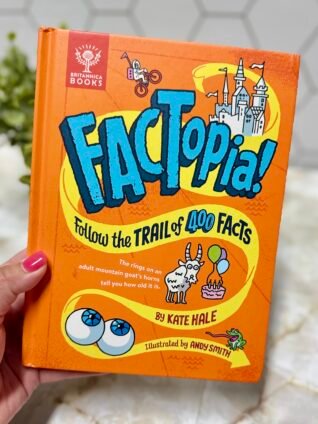
Not every child wants to read a book from the first page straight through to the last, and FACTopia! understands that. Written by Kate Hale and illustrated by Andy Smith, this nonfiction book contains 400 facts verified by Encyclopaedia Britannica. The facts are connected through trails that move from one unexpected subject to another, and readers sometimes get to choose which direction to follow.
Topics include space, animals, bones, dinosaurs, robots, sharks, ancient Rome, and much more. A child might begin with one fact and suddenly find themselves learning about something completely different a few pages later. According to the publisher, the book is designed for ages 8–12 and grades 3–7. You can see examples of its connected-fact format on the official What on Earth! Books page.
This is the kind of book children can open almost anywhere and quickly find something they want to share. I can picture it being passed around at home or in a classroom because everyone wants to show someone else the strangest fact they just discovered.
For children who say they do not enjoy reading, this shorter, highly visual format may feel more approachable than reading a traditional story from beginning to end. Connecting a book to something the child already loves—whether that is animals, space, robots, or strange facts—can also make reading feel like a choice instead of an assignment.
It also belongs on a list of children’s books that inspire learning because it gives children control over how they explore. That freedom can make nonfiction feel less like an assignment and more like an adventure.
Try this after reading: Invite everyone in the family to choose the most surprising fact they found. Children could also keep a “fact of the day” notebook or use one fact as the beginning of a small research project.
Best for: Fact collectors, independent readers, reluctant readers, classroom brain breaks, and children who constantly ask “why?”
How to Choose Children’s Books That Inspire Learning
Age recommendations are a helpful starting point when deciding whether a children’s book is appropriate, but they are only one part of the decision. I also think about the child’s interests, attention span, reading experience, and what they may be going through at that moment. A younger child might enjoy exploring the pictures in a more advanced book with an adult, while an older reluctant reader may feel more comfortable with a highly visual book divided into shorter sections.
If bedtime has been difficult, a short and soothing board book may be the best place to start. If a child is worried about school, a story that reflects those emotions might lead to an important conversation. A creative child may want a book that becomes an activity, while a fact-loving reader may enjoy something they can explore in short sections.
You can also rotate these children’s books that inspire learning instead of expecting one book to meet every need. Keep the bedtime selection near the bed, place the emotional story where you can read it before school, and leave the activity or fact books somewhere children can reach independently.
Simple Ways to Make Reading More Interactive
You do not need an elaborate lesson plan to extend a book. A few simple questions can turn reading time into a richer experience:
- Which part surprised you?
- How do you think the character felt?
- What would you have done differently?
- What is one thing you want to learn more about?
- Can you draw or build something inspired by the story?
These small conversations are one reason I value children’s books that inspire learning. A book may take only a few minutes to read, but the ideas it introduces can stay with a child much longer.
Books That Give Children More to Discover
What I enjoyed most about this group is that the books do not all teach in the same way. Sleepy Savanna and La Sabana Soñolienta bring animal learning into a calming bilingual bedtime routine. What Will I Do If I Miss You? supports emotional confidence. The Book Machine celebrates imagination and personal storytelling, while FACTopia! lets older readers follow their curiosity wherever it goes.
Together, these children’s books that inspire learning show that reading can comfort, encourage, entertain, and educate—sometimes all at once.
Which type of reader do you have at home: an animal lover, a young storyteller, a fact collector, or a child who appreciates an extra-comforting story?
📌 Save This for Later
Thank you for supporting my blog! Please note that this post contains affiliate links, and I may receive payments for clicks, purchases, and/or registrations made through these links. It’s important to mention that ForTheLoveTo.com is a proud participant in the Amazon Services LLC Associates Program, an affiliate advertising program designed to provide a means for sites to earn advertising fees by advertising and linking to Amazon.com. Your support enables me to continue creating valuable content, and I genuinely appreciate it.



Discover more from For The Love To
Subscribe to get the latest posts sent to your email.