
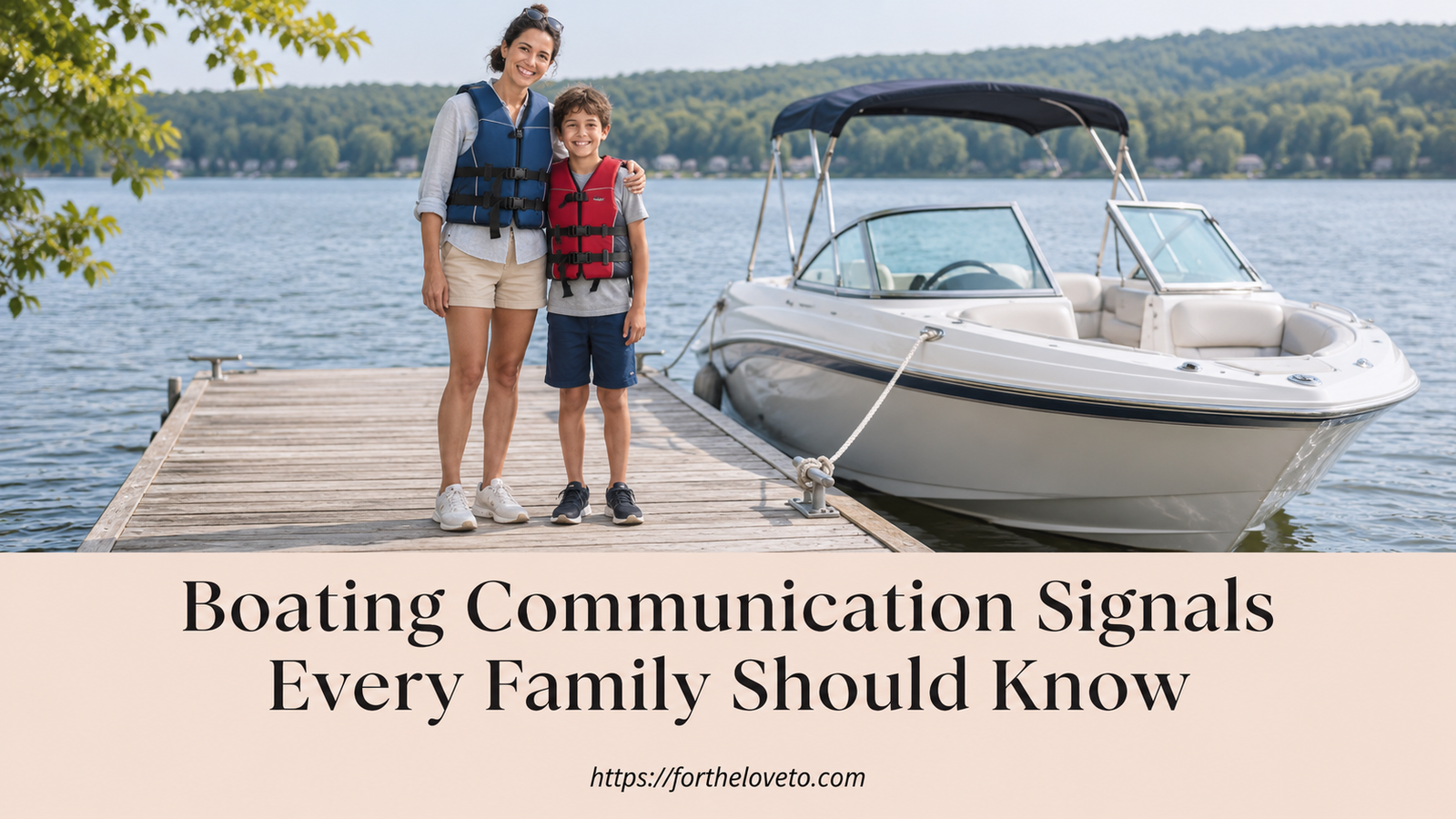
Knowing a few basic boating communication signals can help your family feel more prepared when other vessels approach, visibility drops, or equipment stops working. Clear communication helps boaters avoid collisions, request assistance, and respond to emergencies. However, communication on the water involves more than waving or shouting across boats. Sound signals, navigation lights, radio procedures, and distress signals all serve specific purposes. Learning these basics before leaving the dock can help families enjoy safer outings.
Before your next family trip, take a few minutes at the dock to talk through these boating communication signals. Ask everyone what they would do if they heard a horn or needed help.
Sound Signals: Communicating With Nearby Boats
Boats use short and prolonged horn or whistle blasts to communicate intentions and warn other vessels. A short blast lasts approximately one second, while a prolonged blast lasts four to six seconds.
Under inland navigation rules, one short blast generally signals an intention to pass another vessel on its starboard side, while two short blasts indicate an intention to pass on its port side. These signals have different meanings under international rules.
Five or more short, rapid blasts indicate danger or uncertainty about another vessel’s intentions. Recreational boaters should learn the rules applicable to their operating waters before departure.

Navigation Lights: Communicating After Dark
Navigation lights help boaters determine another vessel’s position, direction, and operating status. Most recreational powerboats display red lights on the port side and green lights on the starboard side.
A white stern light and appropriate masthead lighting provide additional visibility. Requirements vary according to vessel type, size, and operating conditions. Families planning evening outings should inspect navigation lights before departure. Faulty lights can make it difficult for nearby operators to recognize a vessel’s movements.
Marine Radios: Requesting Assistance
A marine VHF radio provides communication with nearby vessels, marinas, and emergency responders. Channel 16 is the primary international distress, safety, and calling channel. Boaters facing grave and imminent danger can transmit a Mayday call, identifying their vessel, location, emergency, and number of people aboard.
Less urgent safety concerns may require different communications, such as Pan-Pan calls. Children should know where the radio is located, although adults should explain when emergency communication is appropriate.
Visual Signals: Attracting Attention During Emergencies
Visual distress signals help rescuers locate boats experiencing emergencies. Depending on the vessel and operating waters, required equipment may include approved flares, distress flags, or electronic signaling devices.
Families should inspect expiration dates and learn how to operate their equipment safely. Store signaling devices where responsible adults can access them quickly. Equipment reliability also matters. Before purchasing a vessel, review its new boat warranty to determine which communication and electrical components receive coverage.
Subscribe to For The Love To!
Get updates on the latest posts and more from For The Love To straight to your inbox.
By submitting your information, you’re giving us permission to email you. You may unsubscribe at any time.
Practice Boating Communication Signals Before Leaving Shore
Families should review basic emergency procedures before every outing. Show passengers where life jackets, signaling equipment, and communication devices are stored. Designate an adult responsible for contacting emergency services and explain how passengers should respond if the operator becomes incapacitated.
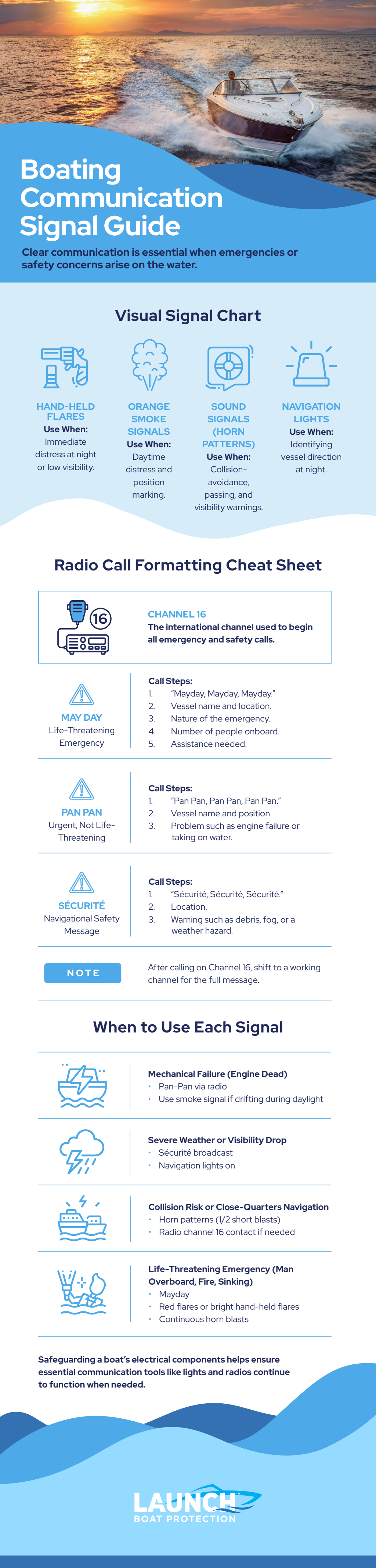
Effective boating communication depends on preparation and familiarity with established signals. Families who prepare together can respond more confidently when conditions change on the water. Check out the infographic below for more information.
📌 Save This for Later
Thank you for supporting my blog! Please note that this post contains affiliate links, and I may receive payments for clicks, purchases, and/or registrations made through these links. It’s important to mention that ForTheLoveTo.com is a proud participant in the Amazon Services LLC Associates Program, an affiliate advertising program designed to provide a means for sites to earn advertising fees by advertising and linking to Amazon.com. Your support enables me to continue creating valuable content, and I genuinely appreciate it.



Discover more from For The Love To
Subscribe to get the latest posts sent to your email.