
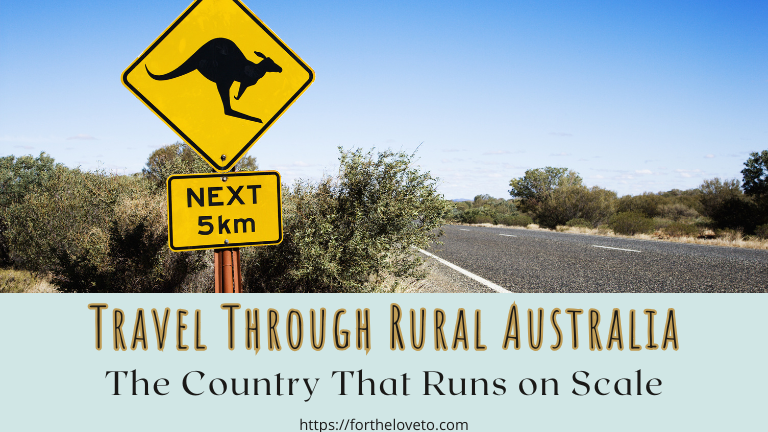
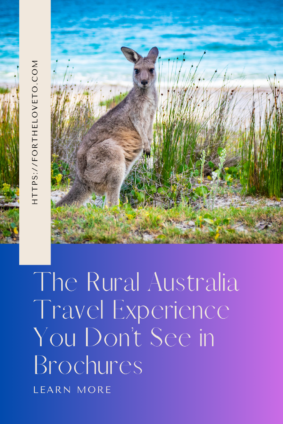
Australia in brochures is clean and compact. A beach at sunset. A city skyline. A kangaroo framed just right. What those images rarely show is the Australia that actually holds the country together — the vast interior, the working land, the farms that stretch to the horizon, and the sheer scale of the things required to live and work in a place where distance is not theoretical, it’s daily reality.
Traveling through regional and rural Australia changes your sense of proportion. Roads run straight for hours. Properties don’t have boundaries you can see from the gate. Equipment isn’t decorative; it’s essential. And structures aren’t built for aesthetics first — they’re built to last, to protect, to operate under conditions that don’t care about comfort.
This is the Australia that doesn’t fit neatly into brochures, and it’s the one that leaves the strongest impression.
Distance as a Way of Life
In much of Australia, distance is not an inconvenience. It’s a design constraint.
You don’t “pop over” to the next town. You plan. Fuel matters. Weather matters. Time matters. Farms operate on land areas that would qualify as regions elsewhere, and a single property might contain multiple ecosystems — grazing land, cropping areas, storage zones, machinery yards — all within one working system.
This changes how people think. You see it in the infrastructure, the planning, and the size of everything built to support that life.
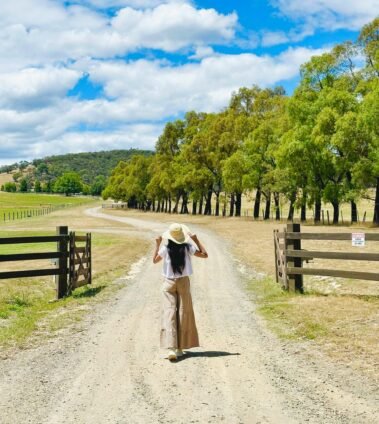
Farms That Are More Like Small Cities
Large Australian farms aren’t just places where crops grow or livestock graze. They are operational hubs with moving parts that rival small industrial sites.
You’ll find:
- Heavy machinery stored and serviced on-site
- Grain handling systems built for seasonal surges
- Livestock operations with dedicated loading, shelter, and feed infrastructure
- Fuel storage, maintenance bays, and supply depots
Nothing here is temporary. Nothing is ornamental. Everything is built to handle heat, dust, wind, and years of use.
This is where farm sheds stop being “buildings” and start being infrastructure.
Subscribe to For The Love To!
Get updates on the latest posts and more from For The Love To straight to your inbox.
By submitting your information, you’re giving us permission to email you. You may unsubscribe at any time.
Sheds as the Backbone of Rural Australia
If you spend any time driving through agricultural regions — Western Australia’s wheatbelt, Queensland cattle country, Victoria’s farming corridors, or South Australia’s mixed-use land — you’ll notice sheds everywhere.
Not small garden structures. Massive, steel-framed buildings designed to shelter machinery worth hundreds of thousands of dollars, protect harvests, and keep operations running regardless of season.
These sheds are:
- Tall enough to house harvesters and loaders
- Wide enough to allow movement, maintenance, and storage
- Engineered for wind loads, heat, and long spans
- Designed to expand as operations grow
For travelers used to seeing farms as quaint or pastoral, this is a revelation. The scale is industrial, and it has to be. Australia’s environment demands it.
Businesses that specialise in large-scale rural and industrial structures, such as those providing the best sheds, for farm and industrial use, exist because without them, the country simply doesn’t function. You can see examples of these large, purpose-built structures at sites like, where the focus is clearly on durability, span, and practical use rather than aesthetics.
Big Machines, Big Land, Big Thinking
Australia runs on big things.
Harvesters that dwarf pickup trucks. Road trains stretching longer than city blocks. Water tanks the size of houses. Grain silos that define the skyline of rural towns. These aren’t excess. They’re proportional responses to scale.
When you stand next to this equipment, you understand something fundamental: Australia doesn’t compress itself for convenience. It builds outward, upward, and tougher.
That mentality shapes people too. There’s a quiet competence in how farmers and rural operators talk about work. No drama. No embellishment. Just function, reliability, and getting on with it.
Travel That Feels Raw and Real
Driving through this Australia is a different kind of travel experience.
You stop in towns where the café doubles as the local news centre. Where conversations revolve around rain patterns, equipment repairs, and market prices. Where pubs serve as social anchors rather than nightlife venues.
There are long stretches of road where the landscape barely changes, and then suddenly shifts — red dirt giving way to green paddocks, flat plains rising into low ranges. The beauty here isn’t curated. It’s earned through patience.
You don’t photograph this Australia for likes. You remember it because it recalibrates your sense of what “big” actually means.
Why This Australia Stays With You
The Australia you don’t see in brochures leaves a mark because it strips travel down to fundamentals.
- Shelter matters
- Equipment matters
- Planning matters
- Durability matters
When you see how farms operate, how sheds protect livelihoods, how infrastructure supports people spread across enormous distances, you understand the country differently. Not as an exotic destination, but as a working system built on resilience.
This version of Australia isn’t asking to be admired. It’s asking to be understood.
And once you see it — the land, the machinery, the sheds, the scale — it quietly rewrites your definition of beauty. Not pretty. Not polished. Just solid, capable, and real.
📌 Save This for Later
Thank you for supporting my blog! Please note that this post contains affiliate links, and I may receive payments for clicks, purchases, and/or registrations made through these links. It’s important to mention that ForTheLoveTo.com is a proud participant in the Amazon Services LLC Associates Program, an affiliate advertising program designed to provide a means for sites to earn advertising fees by advertising and linking to Amazon.com. Your support enables me to continue creating valuable content, and I genuinely appreciate it.


Discover more from For The Love To
Subscribe to get the latest posts sent to your email.